
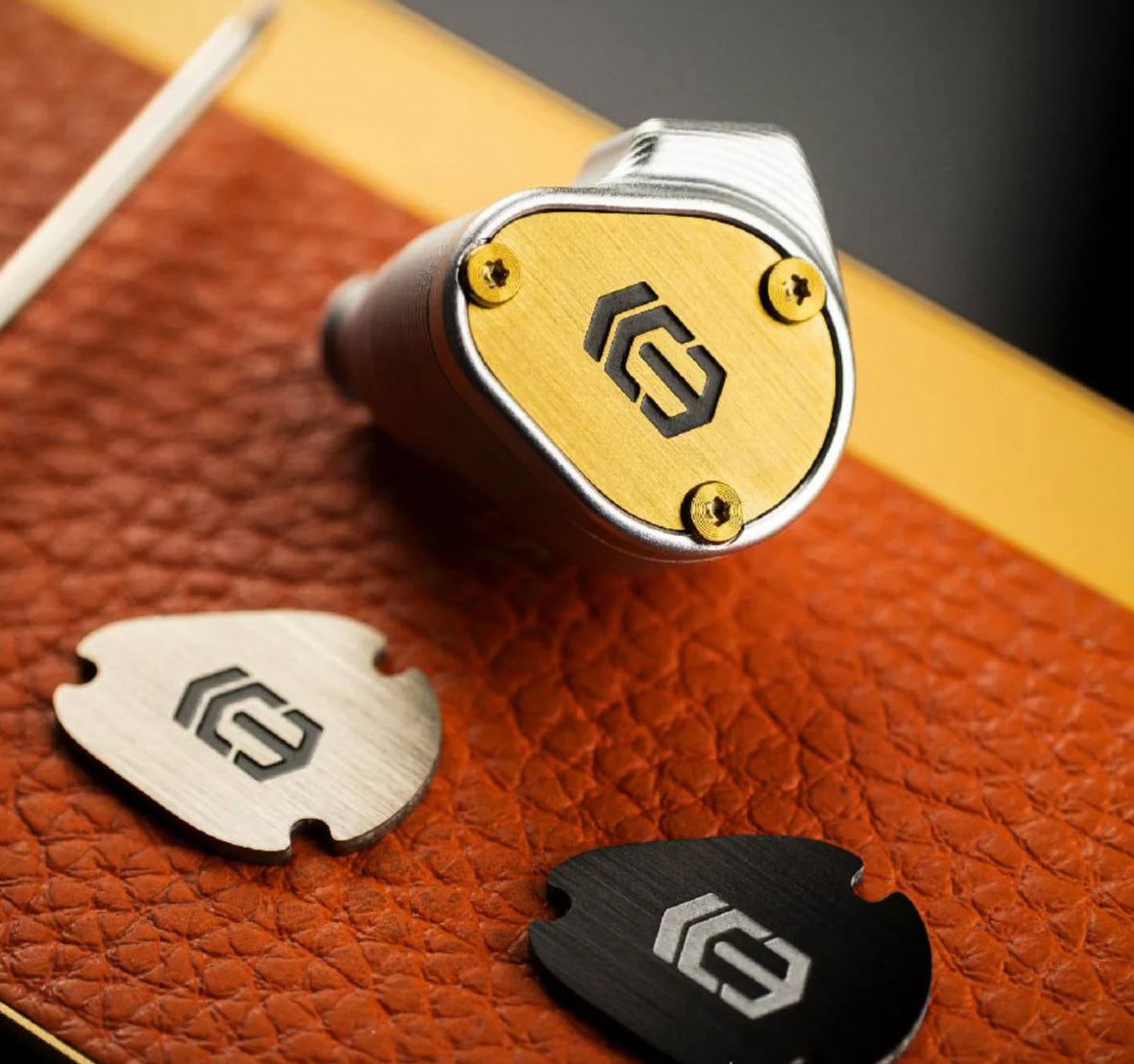
Product: ICE Lab Lumira
Driver Config: 1 Full-Range Dynamic Driver + 2 Micro Planar Drivers
Sound Signature: Balanced, Natural, Slightly Energetic
Tonality: Clean, Refined, Articulate, Slightly Bright
Highlights: An exceptionally well-rounded $399 IEM combining a flagship-specification dynamic driver with dual micro planar drivers, supported by ICE Lab's quad-stage rear chamber and dual-horn acoustic design. Natural and balanced midrange, satisfyingly full yet elastic bass, and detailed, articulate treble. Excellent imaging precision and instrument layering, complemented by premium CNC aluminum construction and three interchangeable faceplates. A remarkably mature and versatile presentation for its price.
Suited Genres: Pop, Jazz, Rock, Acoustic, Classical, Electronic, Instrumental, and Vocal.
Impressions
ICE Lab Lumira is an interesting reminder that a well-executed IEM does not necessarily need an elaborate driver configuration or an extravagant price tag to deliver a convincing listening experience. At $399, Lumira presents a remarkably mature and well-balanced sound, with an emphasis on natural tonality, precise imaging, and strong technical performance.
What impressed me most is how confidently it handles the fundamentals. Rather than pursuing an exaggerated V-shaped signature or relying on excessive bass and treble to create excitement, Lumira maintains a convincing sense of balance across the frequency spectrum. It is lively and engaging, but its energy is distributed with enough restraint to preserve a natural and coherent presentation.
Bass & Midrange
The bass is satisfying without being excessive. There is enough low-frequency presence to give instruments proper weight and substance, but the overall quantity remains well controlled. Bass notes have a pleasing combination of fullness and elasticity, with a rounded yet responsive character that makes percussion and rhythmic passages particularly enjoyable.
Rather than emphasizing sheer impact or overwhelming sub-bass pressure, Lumira takes a more measured approach. The low end provides a solid foundation while leaving sufficient space for the midrange to develop naturally. This balance is especially welcome in complex arrangements, where excessive mid-bass energy can sometimes obscure finer instrumental details.
The midrange follows a similarly mature philosophy. Vocals and instruments are presented with a relatively neutral tonal balance, neither excessively warm nor artificially thin. There is a natural sense of body and articulation, with enough presence to keep voices engaging without pushing them aggressively forward.
Male and female vocals maintain a convincing relationship with the surrounding instruments, while acoustic recordings benefit from Lumira's relatively uncolored presentation. The overall midrange density is well judged, offering sufficient substance without sacrificing clarity or creating unnecessary congestion.
One of Lumira's strengths is how naturally the bass transitions into the mids. There is no obvious sense of excessive warmth accumulating in the lower registers, allowing the presentation to remain clean, organized, and consistent across different musical styles.
Treble & Detail
The upper frequencies are where Lumira introduces a little more personality.
Treble is detailed, lively, and articulate, with a noticeable emphasis on clarity and definition. Cymbals, strings, and higher-pitched instruments have a pleasing sense of sparkle, while subtle textures remain easy to distinguish. The dual micro planar configuration is particularly interesting here, although the sound should ultimately be judged by the complete acoustic system rather than the drivers alone.
Despite its relatively energetic presentation, Lumira generally avoids sounding excessively sharp or fatiguing. There is a good balance between detail retrieval and listening comfort, making its treble performance impressive for this price category.
That said, the lower treble does carry a little more energy than some listeners may prefer. On brighter recordings, this can give certain instruments a slightly more prominent edge, emphasizing their attack and upper harmonics. It is not something I would necessarily consider a significant flaw, but it is a tuning choice worth mentioning.
Listeners who enjoy a particularly smooth, dark, or relaxed presentation may find Lumira a touch lively in this region. On the other hand, those who appreciate clear articulation and a little extra sparkle will likely find this characteristic appealing.
Soundstage & Technical Performance
Lumira's technical performance is another area where it makes a strong impression, particularly in imaging precision and instrument layering.
The soundstage itself is not exceptionally wide, nor does Lumira attempt to create an exaggerated sense of scale. Instead, it focuses on organizing the available space convincingly. Instruments occupy clearly identifiable positions, with good separation and a pleasing sense of depth between different musical elements.
This gives Lumira a surprisingly sophisticated spatial presentation. Rather than spreading everything far apart to create an artificial impression of spaciousness, it maintains a more focused and structured approach. Individual sounds remain distinct, and complex arrangements are reproduced with a commendable sense of order.
Detail retrieval is also impressive for the price. Fine textures and smaller musical elements are presented clearly, without relying entirely on excessive treble brightness to bring them forward. There is a satisfying sense of precision throughout the presentation, making Lumira feel technically capable without sacrificing its relatively natural tonal foundation.
In this respect, I find Lumira particularly well balanced. It may not deliver the enormous soundstage or effortless scale associated with much more expensive flagship IEMs, but its imaging, layering, and overall clarity are genuinely competitive within its category.
Design & Value
Lumira also deserves recognition for its physical construction and thoughtful design.
The CNC-machined aluminum shells feel substantial and carefully finished, while the interchangeable faceplates add a welcome degree of personalization. The package includes three different faceplate options, allowing users to change the appearance of their IEMs without replacing the entire shell.
Internally, ICE Lab has incorporated a quad-stage rear chamber and dual-horn acoustic structure, demonstrating that considerable attention has been paid to the acoustic design even at this relatively accessible price point.
At $399, the IEM market is extraordinarily competitive, and technical specifications alone are rarely enough to distinguish one product from another. What makes Lumira stand out is not a single exaggerated strength, but how consistently it performs across the areas that matter most.
Its bass is full without becoming overwhelming, its midrange is natural and well proportioned, and its treble offers plenty of detail and energy without crossing too far into harshness. Add its excellent imaging and layering, and the result is a product that feels remarkably complete for its price.
Final Thoughts
ICE Lab Lumira is one of those IEMs that becomes more convincing the longer you listen. Its greatest strength lies in its overall maturity, delivering a balanced and natural presentation with enough technical refinement to remain engaging across a wide variety of music.
It does not attempt to be the bassiest, brightest, or most spacious IEM in its category. Instead, it brings together a pleasing combination of tonal accuracy, controlled low-frequency weight, clear and expressive mids, and articulate upper frequencies.
The slightly elevated lower treble is perhaps its most noticeable tonal compromise, and listeners who prefer a particularly relaxed top end may want to consider their preferences carefully. The soundstage is also more focused than expansive, although its excellent imaging and layering help compensate for the moderate width.
Nevertheless, these are relatively minor considerations when viewed against Lumira's overall performance and $399 price.
For listeners looking for a balanced, technically capable, and naturally engaging IEM without entering the premium price bracket, Lumira offers outstanding value. More importantly, it demonstrates a level of tuning maturity that makes it easy to enjoy without constantly drawing attention to any single aspect of its performance.
FR Measurement

Share:
Nostalgia Audio Lord of Logres First Impressions