

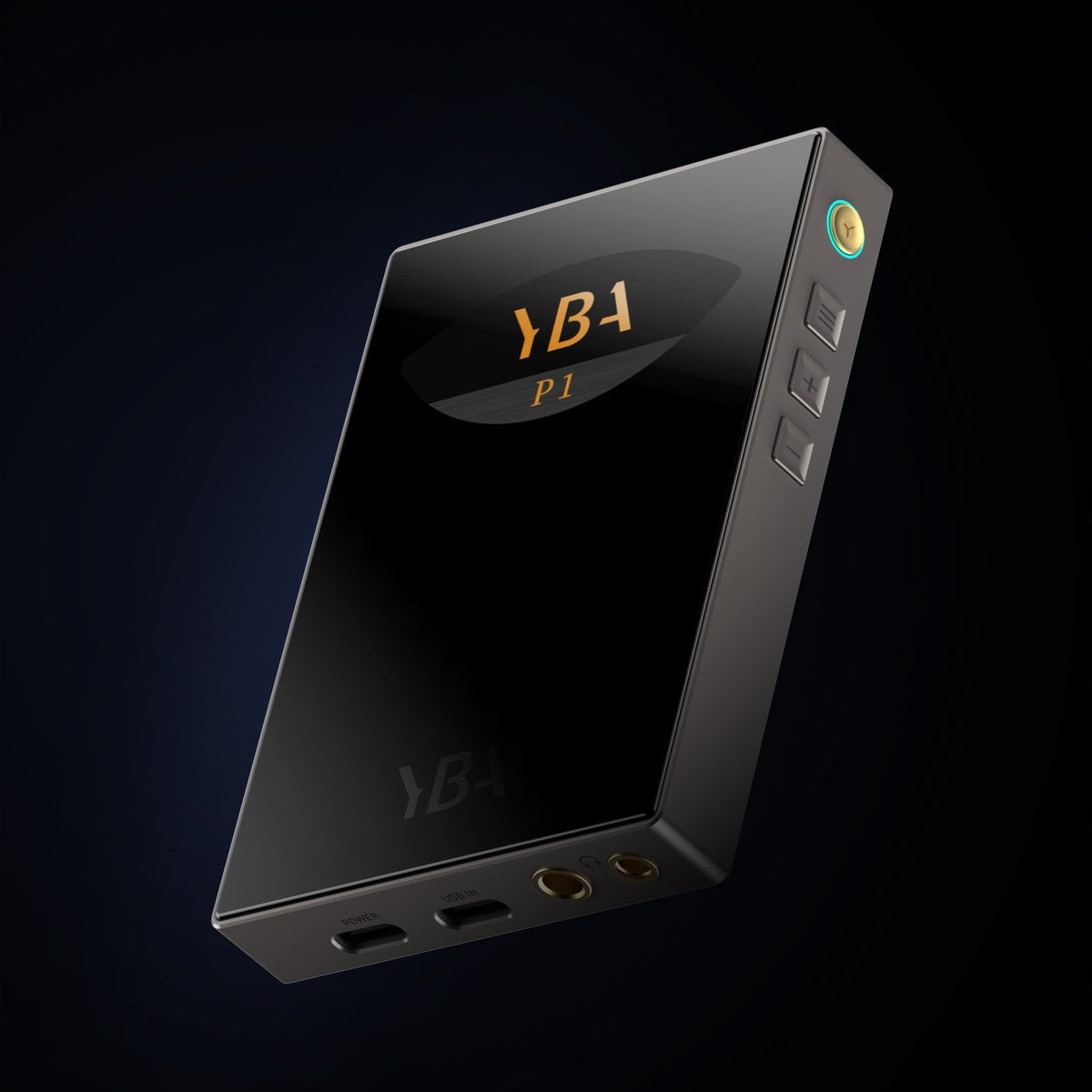
Product: YBA VIBE P1
DAC Configuration: Proprietary 126-Resistor R2R DAC, 19+5-Bit Architecture
Amplification: Dual ADA4610 + Quad BUF434A
Sound Signature: Neutral, Natural, Highly Resolving, Spacious
Tonality: Refined, Transparent, Delicate, Effortless
Highlights: An exceptionally compact, battery-powered R2R DAC/AMP weighing only 120g, featuring a beautifully understated design, outstanding horizontal soundstage, remarkable separation, and exceptional spatial layering. Powerful balanced output exceeding 1W at 32Ω, reaching 1.33W with external power. Its refined, low-coloration presentation and effortlessly expansive soundstage make it a particularly compelling portable source for classical and orchestral music.
Suited Genres: Classical, Orchestral, Chamber Music, Jazz, Acoustic, Instrumental, Live Recordings, and Vocal.
Impressions
The portable DAC/AMP market has become increasingly interesting this year, with manufacturers exploring radically different approaches to achieving high-end sound in increasingly compact devices. Among the many products I have listened to recently, the YBA VIBE P1 has made one of the strongest impressions, not only because of its technical performance, but also because of how much it accomplishes within such a small and elegant chassis.
The first thing that caught my attention was its design. The P1 has a remarkably clean and understated appearance, with a premium, minimalist aesthetic that feels unmistakably European. Despite incorporating a proprietary R2R architecture and independent battery power, it weighs only 120g and remains exceptionally slim. Among the larger, independently powered portable DAC/AMPs I have encountered, the NiPO A200Pro is perhaps its closest competitor in terms of compactness, although the P1 feels even lighter. It is genuinely impressive how YBA has managed to combine this level of portability with such a capable amplifier.
And the amplification is no afterthought. The P1 delivers more than 1W into 32Ω through its balanced output, increasing to 1.33W when connected to an external power source. This is an extraordinary amount of available power for a device of this size, although actual driving performance will naturally depend on the headphones and listening conditions. The P1 also offers NOS/OS operation, a built-in screen, and PEQ functionality, making it a surprisingly complete portable solution without compromising its minimalist design.
Soundstage & Spatial Presentation
The P1's greatest strength is undoubtedly its spatial presentation.
Among the portable DAC/AMPs I have listened to, including some considerably larger devices such as the Quloos MUB5, the YBA P1 delivers the widest horizontal soundstage and the most impressive sense of instrument separation I have encountered so far. What makes this particularly special is that the width does not come at the expense of depth or spatial organization. Its front-to-back layering is equally convincing, reaching a level that I would place alongside the Lotoo PAW S3 at the very top of this comparison.
The presentation feels remarkably open, with individual instruments occupying clearly distinguishable positions within a generously proportioned space. Rather than emphasizing the outlines of instruments simply to create separation, the P1 allows each musical element to unfold with a natural sense of distance and scale. There is an effortless quality to the way the soundstage develops, supported by a very dark, clean background that allows subtle details and quieter passages to emerge without unnecessary distraction.
This becomes particularly impressive with classical and orchestral recordings. Different instrumental sections are arranged with excellent clarity, allowing strings, woodwinds, brass, and percussion to retain their individual identities even during complex passages. Large orchestral crescendos are especially enjoyable, as the P1 maintains a convincing sense of scale and separation while allowing the entire performance to develop with impressive authority. The combination of large string sections and dramatic percussion creates a wonderfully immersive presentation, with both the delicacy and grandeur that this type of music demands.
Tonality & R2R Character
Tonally, the P1 reminds me of some of the more modern interpretations of European high-end R2R sound.
Interestingly, the comparison that comes to mind is not the romantic, warm, and richly saturated presentation I associate with TotalDAC. Instead, I hear more similarities with the philosophy of brands such as Sonnet and Metrum: natural, highly resolving, spacious, and refined, with relatively little added coloration.
The P1 does not attempt to make its R2R identity obvious through exaggerated warmth or softness. Its bass, midrange, and treble are remarkably evenly proportioned, with perhaps a slight additional sense of presence at both frequency extremes. If I were to describe the balance informally, it would be something close to 3.5/3/3.5 across the three main frequency regions.
The bass is controlled and articulate, providing a convincing foundation without adding excessive thickness. The midrange feels natural and transparent, allowing vocals and instruments to retain their own tonal identities rather than imposing a strong character upon them. The treble is beautifully refined, with delicate textures, excellent extension, and sufficient air to support the expansive soundstage without becoming overly bright.
There is something particularly sophisticated about this balance. The P1 offers high resolution without making the presentation feel aggressively analytical, while its natural smoothness never turns into the softened outlines or vague imaging sometimes associated with more traditional R2R implementations.
It is a mature, modern interpretation of R2R sound, one that prioritizes openness, precision, and tonal refinement rather than using warmth and coloration as its defining characteristics.
5 Portable DAC/AMPs Compared — Find Your Perfect Match
Cayin RU9, Lotoo PAW S3, NiPO A200Pro, YBA VIBE P1, and EarMen L-AMP MK2
Discover the differences in sound signature, features, and performance before you decide.
Share:
EarMen L-AMP MK2 First Impressions