Video review: BGVP Astrum - Stunning Looks to match Stunning Sound


When I say this is an exceptional total experience I mean it is a great listen, with impactful bass and details, a great unboxing experience, and a beautiful iem. “Red Carpet Experience” for under $1000.
Pros:
Sublime all-rounder
Candidate for "one and done" at this price range
Accessories PUNCH high above their price range
Box has a built in light (what!)
Cons: Not for bassheads
First Impressions:
The Astrum immediately feels like it was built to impress: luxurious packaging, beautiful finish, and a solid build that feels premium in every detail. The shells are ergonomic, fit well, and with good tips they seal nicely.
Sound Profile:
Bass is capable and musical, but don’t expect bass-head levels of punch. It provides what’s necessary: rhythm, weight, but clarity always
Mids are a highlight. Vocals (especially female) are clean, expressive, and nicely positioned.
Highs are smooth and extend without glaring peaks; there’s air, but Astrum avoids harsh sibilance.
Overall presentation is balanced; what you lose in ultimate bass extremes you gain in coherence, dynamics.
Listening fatigue (for me) is minimal.
Best Suited For (in my opinion):
Fans of orchestral / soundtrack / acoustic music; vocalists; anyone who wants an IEM they can use all day, across many genres, without annoying fatigue.
Less ideal if your main diet is heavily bass-dominant music and you want sub-deep punch in live settings.
Setup & Synergy:
With my L&P P6Pro 10AE, Eletech Euclid cable, and Baroque Stage tips, the Astrum demonstrated its strengths: clean separation, satisfying bass decay, and a rich midrange. Tip fit made a big difference in bass and imaging. Good source gear helps a lot.
Conclusion:
The BGVP Astrum offers tremendous value: excellent build, thoughtful design, and a sound signature that will appeal to a wide range of listeners. Unless you're a bass addict (or want seismic lows at any cost), Astrum might well be your “one pair to keep” IEM.
BGVP Astrum – First Impressions Review
Unboxing & Presentation
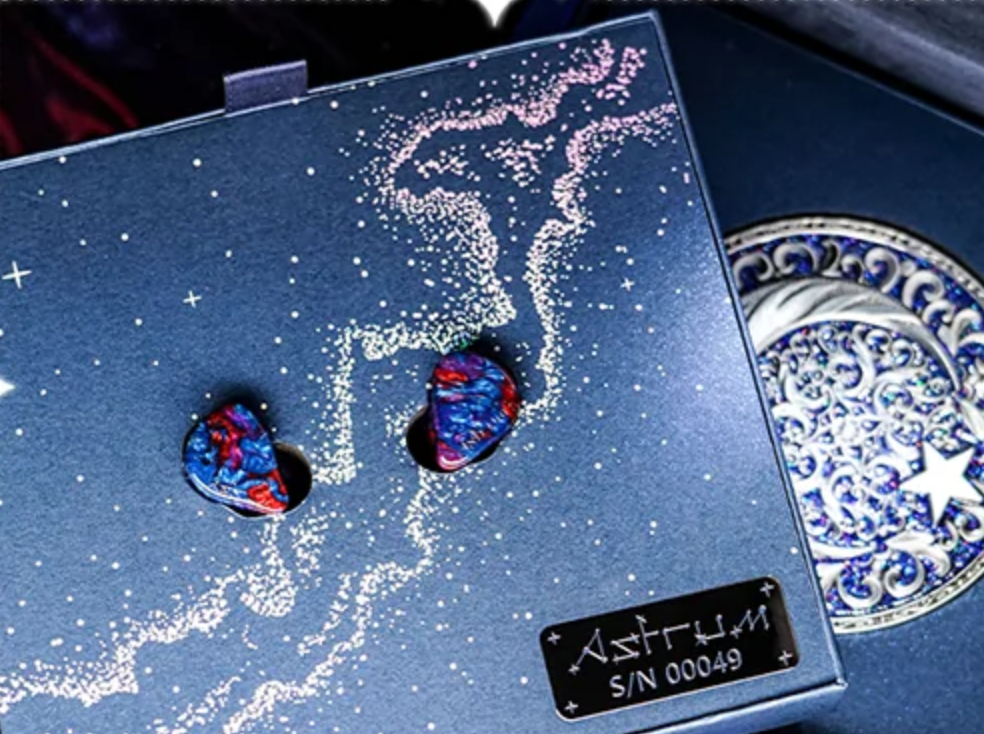
The BGVP Astrum doesn’t just arrive in a box—it arrives in an experience. From the moment it’s in your hands, the packaging tells you this isn’t just another high-end IEM, it’s something closer to a collector’s piece.
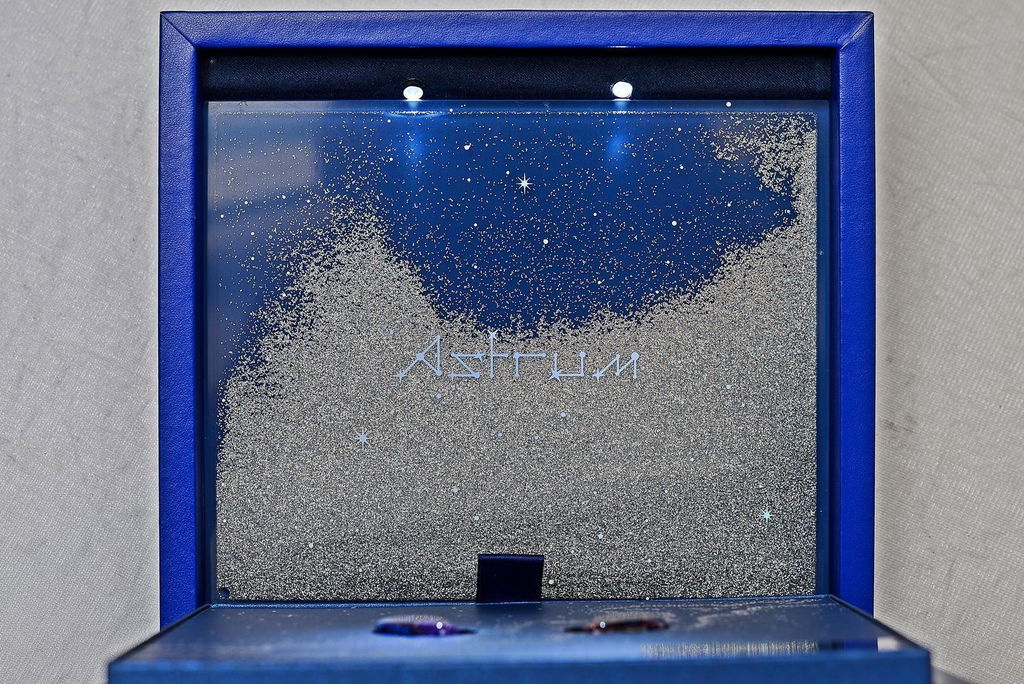
The outer box is wrapped in a soft-to-the-touch leather finish with firm, protective walls. The surface is decorated with a galaxy motif that glimmers under the light, and just handling it gives a sense of weight and craftsmanship.
Inside, the Astrum unboxing is a three-layer journey:
First Layer – The IEMs
The lid opens to reveal the earpieces themselves, seated in a starry backdrop with metallic inlays that resemble a flowing Milky Way. Each unit is labeled with its own serial number plate, adding to the feeling of exclusivity.
Second Layer – The Treasure Box
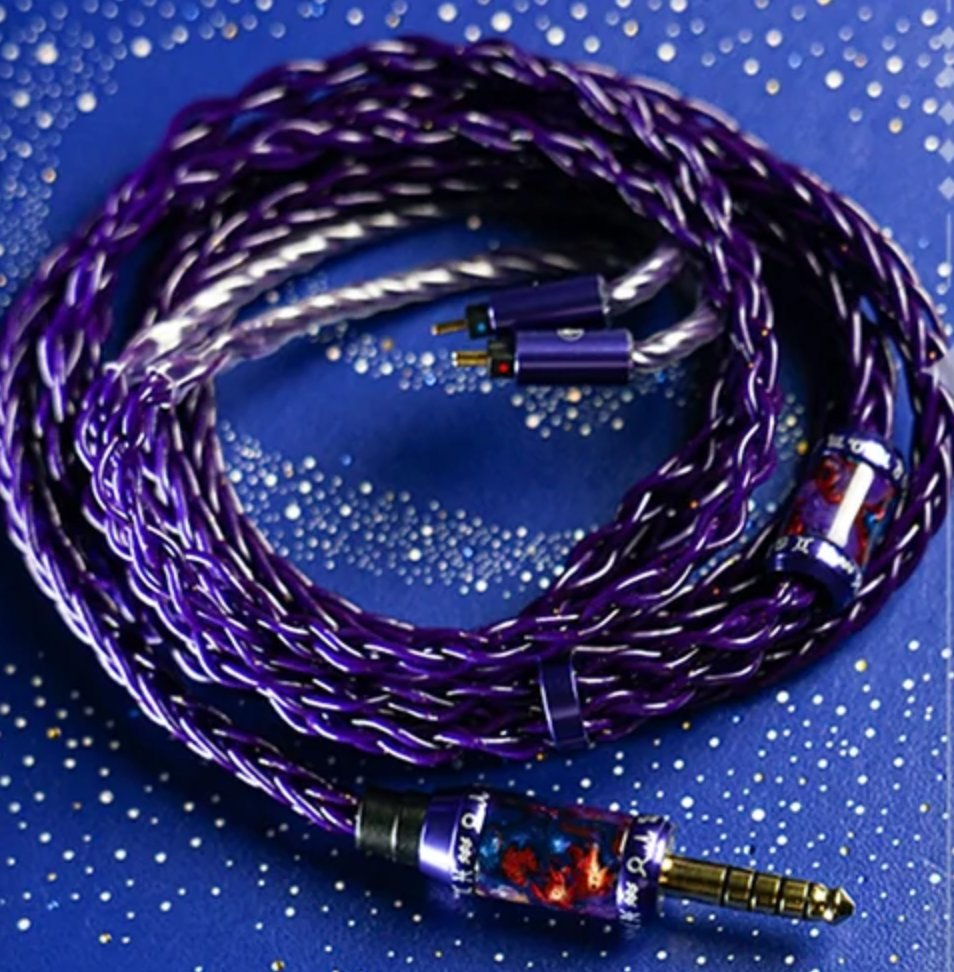
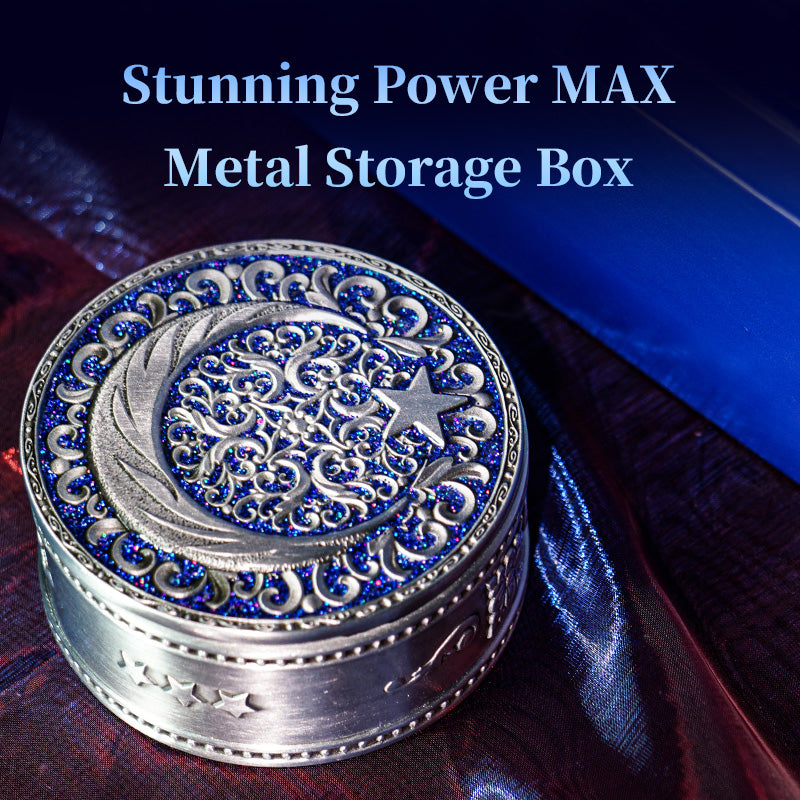
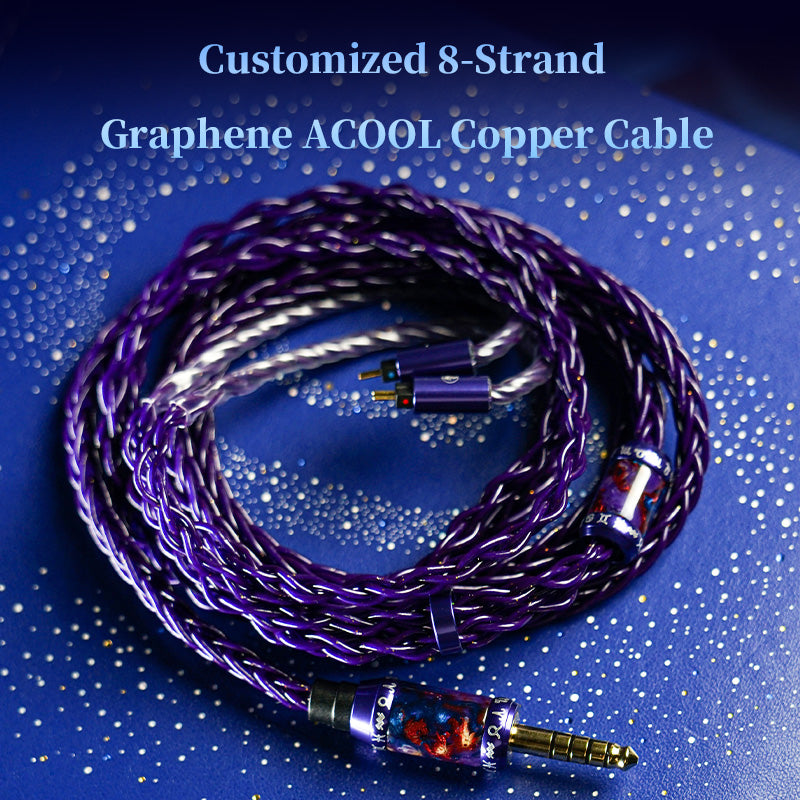
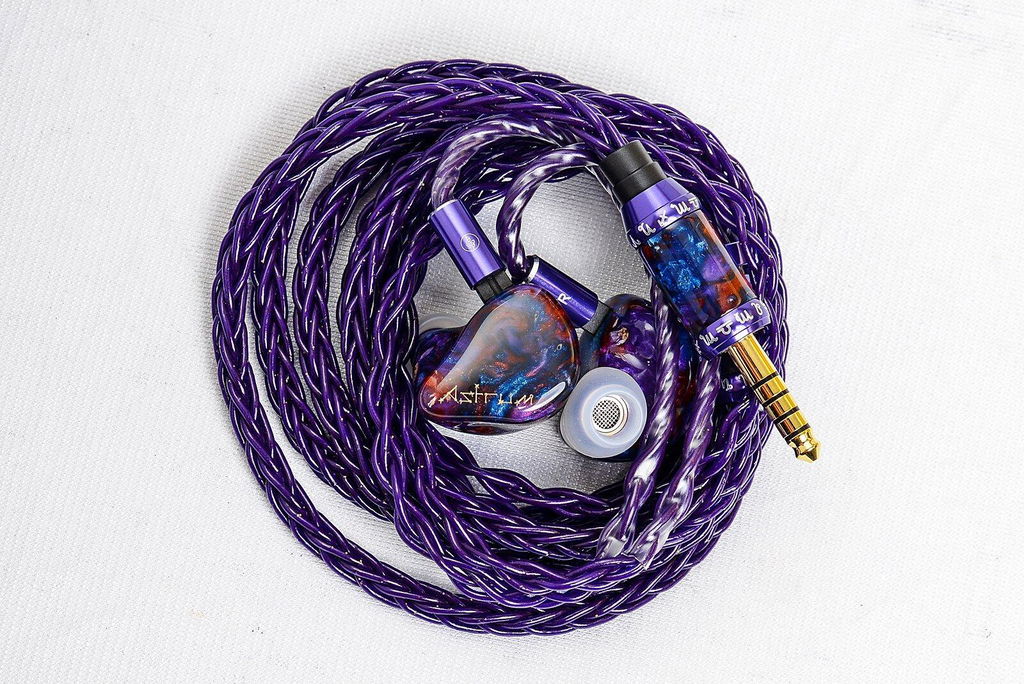
Beneath the IEMs lies what might be the most beautiful accessory case I’ve seen in any audio product: a heavy metal storage box, finished with intricate moon-and-stars engraving. Inside rests the included cable. While the cable is a perfect color match to the Astrum’s cosmic theme, with its purple braid and gold accents, in hand it feels a bit plasticky and less premium than the rest of the package.
Third Layer – Ear Tips & Tools
The final layer holds four full sets of tips (12 pairs in total), neatly organized in custom trays, alongside a cleaning brush. The selection ensures that every listener can dial in their perfect fit and comfort.
And then there’s the showstopper: the oil-and-glitter window built into the box’s roof. Powered by two built-in lights, the glitter drifts slowly across suspended oil, creating a mesmerizing cosmic shimmer. It’s like watching a galaxy in motion—completely unexpected in an IEM package, and absolutely unforgettable.
This is hands down the most impressive unboxing I’ve ever seen at any level. The BGVP Astrum doesn’t just raise the bar—it launches it into orbit.
Design & Fit
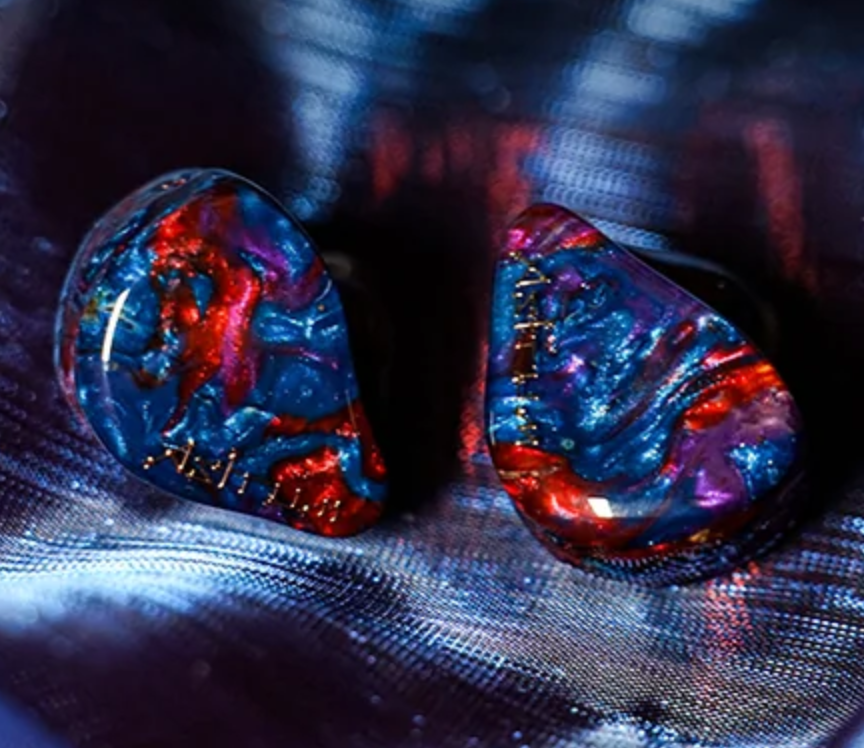
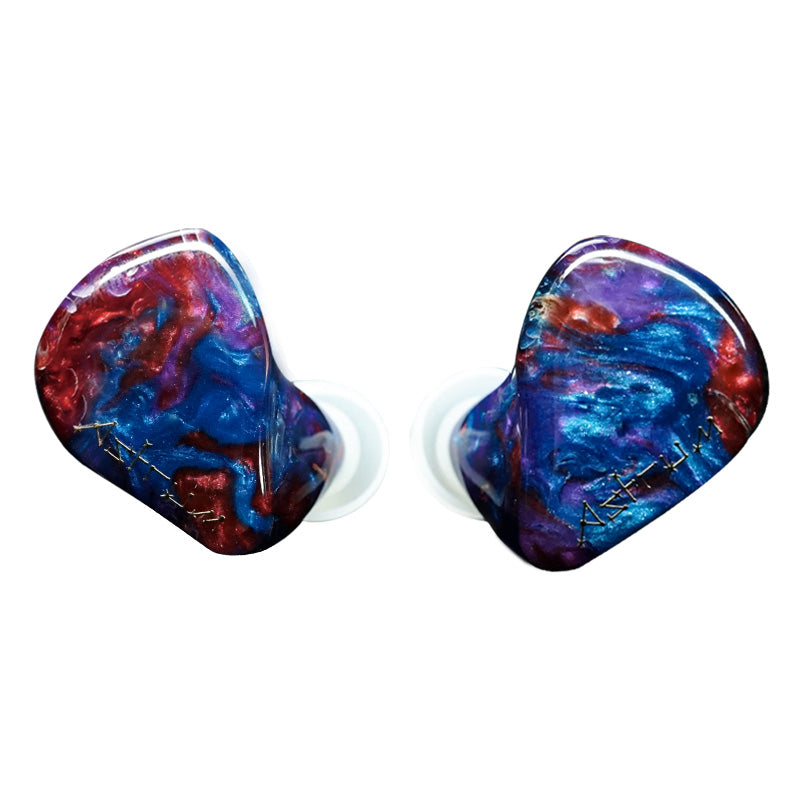
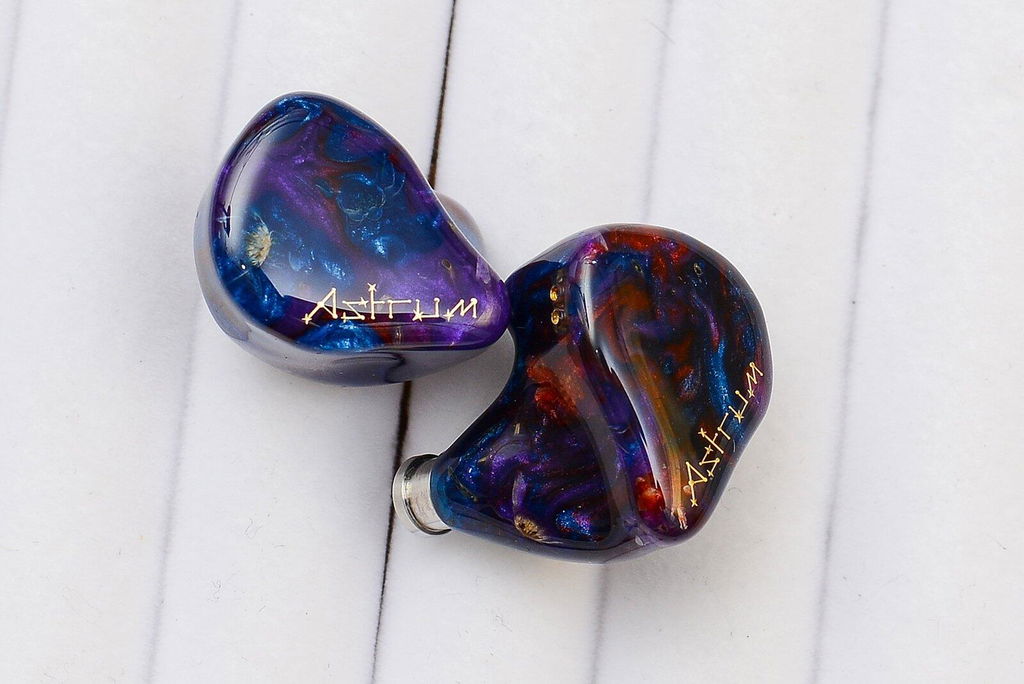
The BGVP Astrum IEMs are simply gorgeous. Unlike many IEMs where only the faceplate gets the artistic treatment, the Astrum’s entire shell is finished in a seamless, flowing mix of colors that shimmer and shift like a cosmic nebula. From every angle, they catch the light in a way that feels alive, with no harsh edges or breaks in the design. It’s a full-body finish that feels intentional and masterfully executed.
Build quality inspires confidence. The shells feature strong mesh grilles across the openings, adding durability and refinement. Despite the luxurious look, the Astrum earpieces are impressively lightweight, but never cheap-feeling—BGVP clearly struck the balance between comfort and sturdiness.
Connection is handled by the reliable 2-pin standard, making cable swaps simple. The size sits in the medium range, not overly large or bulky, and the ergonomic shaping allows them to nestle into the ear naturally. Once in place, they feel practically weightless, with a comfort level that makes long listening sessions effortless.
First Impressions – Sound
Sound impressions are always tricky out of the box, and the BGVP Astrum is an IEM I know will benefit from burn-in and more listening time. Even so, early impressions are promising.
Across different genres, the Astrum shows no glaring weaknesses—it performs consistently well and never stumbles, whether in bass-heavy tracks, vocal-driven music, or more complex arrangements.
In a quick A/B comparison with my Kinera NOTT Phantom, some differences stood out: the Astrum delivers stronger, more impactful bass, while the Nott edges ahead in vocal clarity and presence. That said, it wouldn’t be fair to lock in conclusions just yet—these are first-day notes, not the final word.
For now, I’ll simply say the Astrum sounds good across the board, with no immediate red flags. A full sound breakdown will come after proper burn-in and extended listening time.
Final Thoughts
This is truly an impressive presentation: a breathtaking unboxing, wonderful looking and feeling IEMs, and a nicely color-correct cable. It’s clear that a great deal of time and effort went into making the Astrum a one-of-a-kind experience for the buyer.

Could not have had a better experience with this firm. Professional, quick and very helpful after the sale.
purchased the Canpur CP74E to fill a specific role in my collection. I already had the Elysian Apostle 2026 as a balanced daily driver and the Meze ASTRU as a warmer, more organic option. What I wanted from the CP74E was something more analytical and revealing, but still natural, cohesive, and enjoyable for extended listening.
The CP74E has delivered exactly that.
Its strongest quality is instrumental realism. On Lupe Fiasco’s “What It Do,” strings sound more convincing and more grandly performed than they do on Apostle. The difference is not just additional detail. The CP74E presents the instruments with a more believable sense of texture, scale, and physical presence.
The staging also works well for the role I wanted it to play. It feels wide without becoming artificially distant or hollow. There is enough depth and separation to study a recording, but the presentation remains intimate enough to preserve musical engagement. To be clear, this is not the IEM for those looking for hyper-separation and super-technicality. It aims to be natural in its presentation.
Bass is disciplined rather than exaggerated. It has solidity, punch, and a clean in-and-out quality. It does not overwhelm the mids or turn the IEM into a bass-focused experience. Listeners looking for heavy sub-bass rumble or a club-like presentation may want something else, but the CP74E’s low end is very well judged for a reference-natural tuning.
The midrange is cohesive and lifelike, which matters greatly to me because I listen to a lot of vocals, strings, horns, and percussion-heavy recordings. Treble remains controlled and clear without becoming sharp or fatiguing. The overall presentation is resolving, but not sterile.
Fit improved further with wide-bore tips. In my experience, they slightly reduced bass quantity, expanded the apparent stage, and helped separate percussion more naturally. That tradeoff worked well for my preferences.
The CP74E is not trying to create the largest stage, the thickest bass, or the most dramatic flagship effect. Its appeal is more mature than that. It is an analytical IEM for listeners who still prioritize naturalness, cohesion, and long-term enjoyment.
For my collection, it has become the ideal reference-natural analytical complement to Apostle and ASTRU.
Brilliant! I have both. I have been deep down the cable rabbit hole including PW Meet Agains Shielding, First Times Shielding, First Times re, 1950's Shielding, and Attila among many others and these are now by some margin my favorites. They are indeed quite different while sharing the same DNA. If you have any questions I can be found on Head-Fi under Bjorn154.
This IEM took me a while to write about. I extremely enjoy the ME, enough that it finally dethroned the Jewel for my personal taste. The ME has a great W sound signature, everything is where it belongs without any one frequency becoming offensive. Just enough bass presence to make every genre sound great without getting too heavy handed. This is where the ME surprised me, amazing texture and you feel deep notes that you can barely hear. I’ve never heard notes on an IEM this deep into the frequency range, still not sure if I hear them or just feel them. Bass is well layered and better layered, textured than any IEM I’ve heard. If you’re a bass head this IEM has great extremely detailed bass with just the right amount, it’s not over the top and does not extend into the vocal range. When called for the bass can really feel and sound like a floor standing sub woofer is in your ear. While the bass in other sounds can sound soft and perfectly textured with extreme details and separation in bass like I haven’t heard before. Mids are well placed in the mix and extremely well detailed with a touch of warmth. They have great separation and clarity. With the bass presence the mids are not pushed back into the mix and not masked or overly warm. They are still fairly close to neutral, just enough warmth and weight to sound natural. Vocal range is clean, well detailed with just the right amount of weight, texture, tone. Male and female vocals are on equal plane which I find less common in today’s iems. The treble is where some people may split opinions. For myself it’s pretty close to perfect like the Jewel, it’s all there, very well detailed but everything is a touch softer and non offensive. Treble doesn’t sound harsh, sharp or thrown in your face but more naturally there. I understand for some genres like EDM some people like a more sharp in your face treble for myself that type of peaky treble is harsh for long listening. The ME is easy to enjoy for long periods fatigue free and plays well with good and bad recordings making everything sound very enjoyable. For my taste this was the Jewel and the ME now replaces it with better bass while keeping the rest of the frequency range I loved in the Jewel. The ME has a little deeper stage than the Jewel and similar in width, great size, not the largest I’ve heard but great for a W sound signature, most with larger sounding stages tend to come with recessed vocals. Details have plenty of space between notes. It’s so well tuned it sounds great at low volumes and high volumes, keeping good dynamics at low is a feat, everything is present and no fatigue. Big bonus is the ME comes with a great cable and doesn’t require an upgrade. The cable is extremely well matched to the ME. Lastly the build quality is quite lovely in person, light weight, small for the number of drivers and comfortable. The supplied accessories are excellent, from exterior case to tip case to travel tip case and travel suede case. Best APX to date. It really takes analog sound I enjoy to the next step.