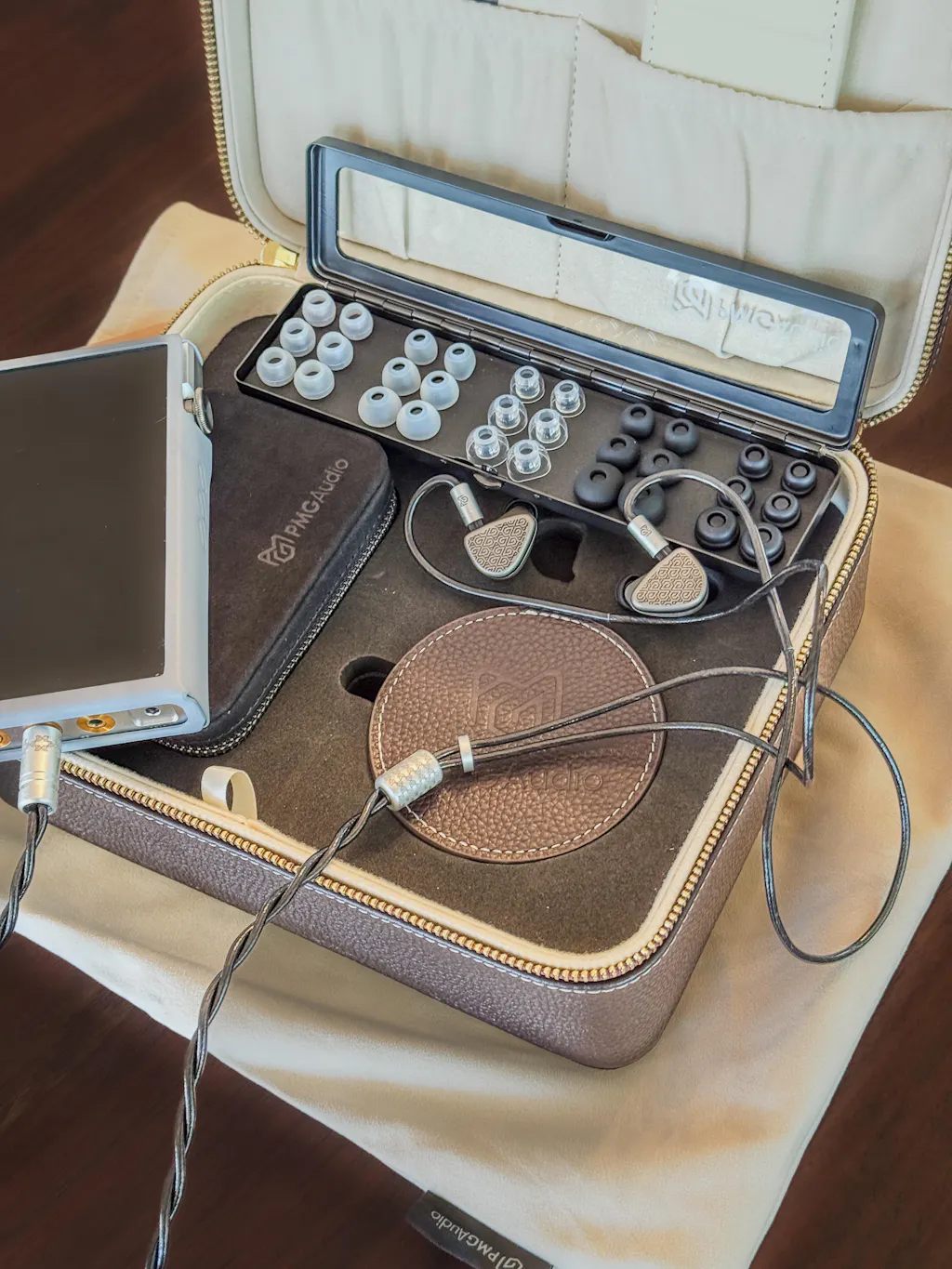
purchased the Canpur CP74E to fill a specific role in my collection. I already had the Elysian Apostle 2026 as a balanced daily driver and the Meze ASTRU as a warmer, more organic option. What I wanted from the CP74E was something more analytical and revealing, but still natural, cohesive, and enjoyable for extended listening.
The CP74E has delivered exactly that.
Its strongest quality is instrumental realism. On Lupe Fiasco’s “What It Do,” strings sound more convincing and more grandly performed than they do on Apostle. The difference is not just additional detail. The CP74E presents the instruments with a more believable sense of texture, scale, and physical presence.
The staging also works well for the role I wanted it to play. It feels wide without becoming artificially distant or hollow. There is enough depth and separation to study a recording, but the presentation remains intimate enough to preserve musical engagement. To be clear, this is not the IEM for those looking for hyper-separation and super-technicality. It aims to be natural in its presentation.
Bass is disciplined rather than exaggerated. It has solidity, punch, and a clean in-and-out quality. It does not overwhelm the mids or turn the IEM into a bass-focused experience. Listeners looking for heavy sub-bass rumble or a club-like presentation may want something else, but the CP74E’s low end is very well judged for a reference-natural tuning.
The midrange is cohesive and lifelike, which matters greatly to me because I listen to a lot of vocals, strings, horns, and percussion-heavy recordings. Treble remains controlled and clear without becoming sharp or fatiguing. The overall presentation is resolving, but not sterile.
Fit improved further with wide-bore tips. In my experience, they slightly reduced bass quantity, expanded the apparent stage, and helped separate percussion more naturally. That tradeoff worked well for my preferences.
The CP74E is not trying to create the largest stage, the thickest bass, or the most dramatic flagship effect. Its appeal is more mature than that. It is an analytical IEM for listeners who still prioritize naturalness, cohesion, and long-term enjoyment.
For my collection, it has become the ideal reference-natural analytical complement to Apostle and ASTRU.