Review: First look: Canpur CP752B
Impression: A true end-game IEM
Video Review: Canpur CP752B IEM Review: The New Summit Fi King?
Review: First look: Canpur CP752B
Impression: A true end-game IEM
Video Review: Canpur CP752B IEM Review: The New Summit Fi King?

Review: First look: Canpur CP752B
Impression: A true end-game IEM
Video Review: Canpur CP752B IEM Review: The New Summit Fi King?
I still remember the first time I heard Canpur 622b and was completely smitten with the intoxicating mid’s and sparkly but dry treble. The bass had nice texture but was a bit lackluster, a bit too rounded and lacking extension. The mid’s stole the show and at this time I was very focused on engaging mid’s and warmth over all else. Since then, my tastes have evolved and the first few minutes of listening to Canpur’s latest flagship the 752b I knew I was going to fall hard for its sound as it hits very very close to my current preferred taste. Engaging, clear, hint of warmth, extended and resolving treble, spacious and resolving mid’s with a supportive deep hitting bass. My only negative is the lack of DD bass timbre, decay and slam.
The Canpur is insanely detailed and technical. It literally just pours out information in the most liquid way possible. No shout, no fatigue. A huge open stage with notes that seem to float around you. The tonality is a bit more dry than textured throughout the FR but not to its dismay, it works for the tuning very well. To quote @aaf evo “Ugh I love 752B. Idc if this sounds like 3 year old water it’s the tastiest stale water of my life” I love this statement because…well…its funny but more so because it so accurately describes how I also vibe with the 752b. Or another way of saying it in more romantics terms, is that 752b is luxuriously refined. It works very well as an all rounder for me.
Bass is not the star of the show here but it also does not take a back seat. The bass is very satisfying, deep and rumbles nicely when called upon. Although you will not feel the push of air like that of a Dynamic Driver or hear an earthy timbre. It does still fill the head with nice reverb that is not distracting.
Mids are naturally distanced with plenty of space around each instrument/voice. Imaging and layering is spectacular here and nothing ever feels even the slightest congested or smeared. The stage is quite spherical, to my ear equidistant in all directions out of the head. Notes are not dense but more dry, light with super sharp transients from edge to edge of notes. Notes seem to float instead of feeling anchored. They float in there correct places with great stage structure. My only teeny complaint is the timbre of vocals and acoustic guitar can sound a bit thin at times. It’s not a deal breaker as it’s not to the point of being annoying. However it is how I hear it.
Treble is very resolving, layered and extended. There is a very occasional peak but for whatever reason it doesn’t come across fatiguing or piercing, to my ear I hear it like a very pronounced sparkle. The treble isn’t as dry sounding as it was on 622b and it is much better extended than that set as well. It still has a dryness to it but also a nice thick outline to the notes with defined edges.
The Dynamic range is also wonderful. Macro and micro dynamics swing with ease and shift in accordance to the music playing. Every nuance is heard. Imaging reached 3D holographic levels. This is true Summit techs. It is extremely immersive and even at low listening volumes nothing is compromised. 752b is so easy to drive as well. I used both the Quloos MUB5 and Ibasso Dx340Ti, both work very well for 752b. The 340Ti having better treble res while MUB5 offered a slightly richer tonality.
The 752b has really taken me by surprise, I held off on purchasing it for awhile as I thought it would bore me or become too much over long listening sessions but both could not be further from the truth! It has truly captivated me and is in good complementary rotation. Going to Fulgrim from 752b reminds me why I love the Fulgrim and going to the Asteria from 752b again reminds me why I love the Asteria and vice versa going from each of those to 752b reminds me why I bought the 752b and have fallen hard for its sound
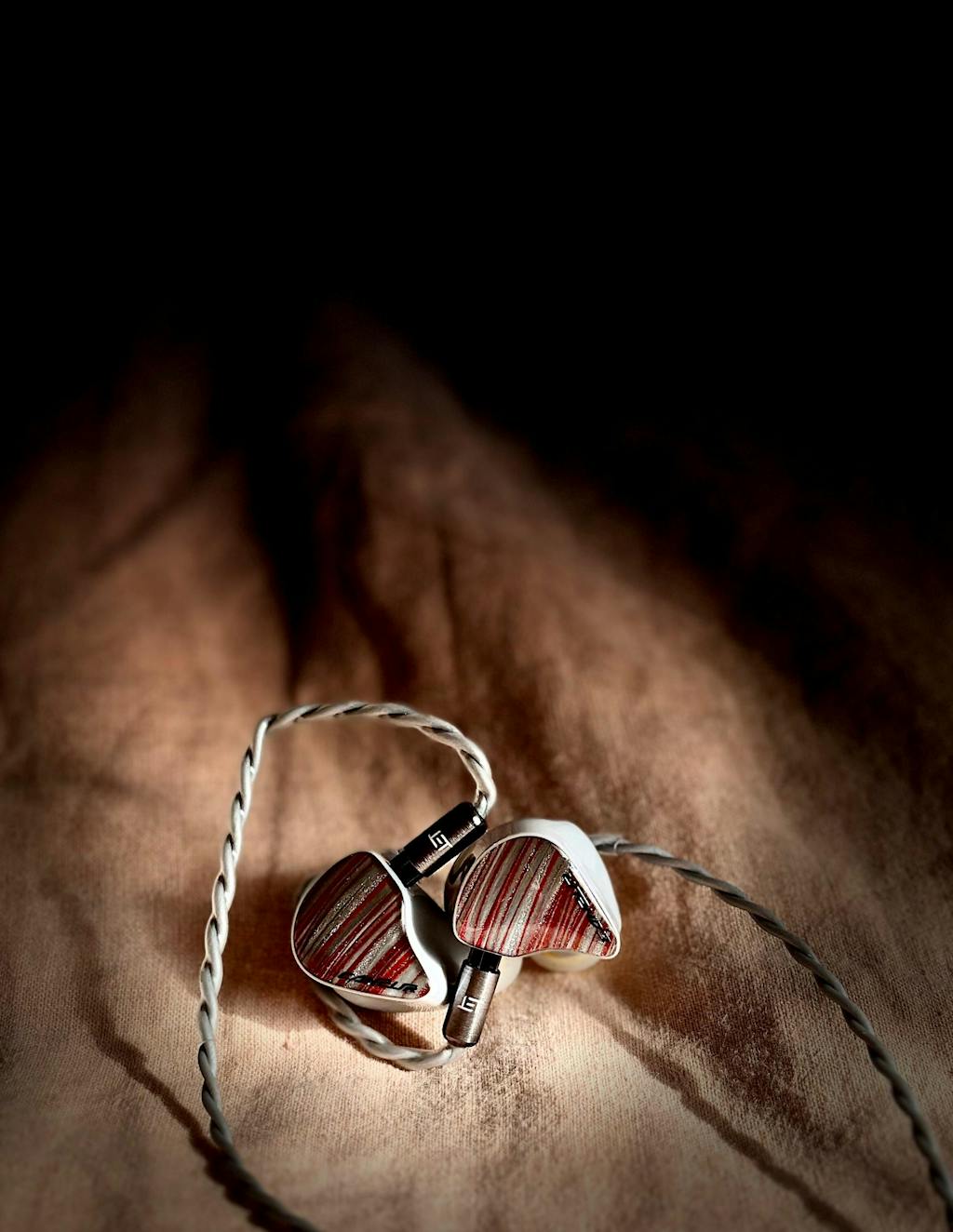
The Canpur CP752B is nothing short of a revelation in the "summit-fi" landscape, effectively redefining what a flagship multiverse-driver IEM can do. The first thing that grabs you is the sheer scale of the soundstage—it is genuinely holographic. Where other IEMs might give you width, the CP752B uses its dual bone conduction drivers to create a 3D bubble that feels less like listening to earphones and more like sitting in a properly treated listening room. The separation is surgical without being sterile; you can pick out every layer of a complex track, yet the drivers—despite being a mix of BA, EST, Planar, and BC—blend with a coherence that is almost impossible to find in other "quadbrid" sets.
Tonally, these strike a brilliant balance that many are calling a refined "W-shape," bringing the best of all worlds. The bass is authoritative and massive, providing that visceral, textured rumble you usually only get from dynamic drivers, yet it retains the lightning-fast speed of balanced armatures. It hits with a weight that provides a solid foundation for the music without bleeding into the mids. Vocals are pushed forward just enough to be intimate and engaging, avoiding that distant "scooped" feeling, while the treble offers that elusive "sparkle without pain"—delivering immense air and micro-detail that extends forever without ever becoming sharp or fatiguing.
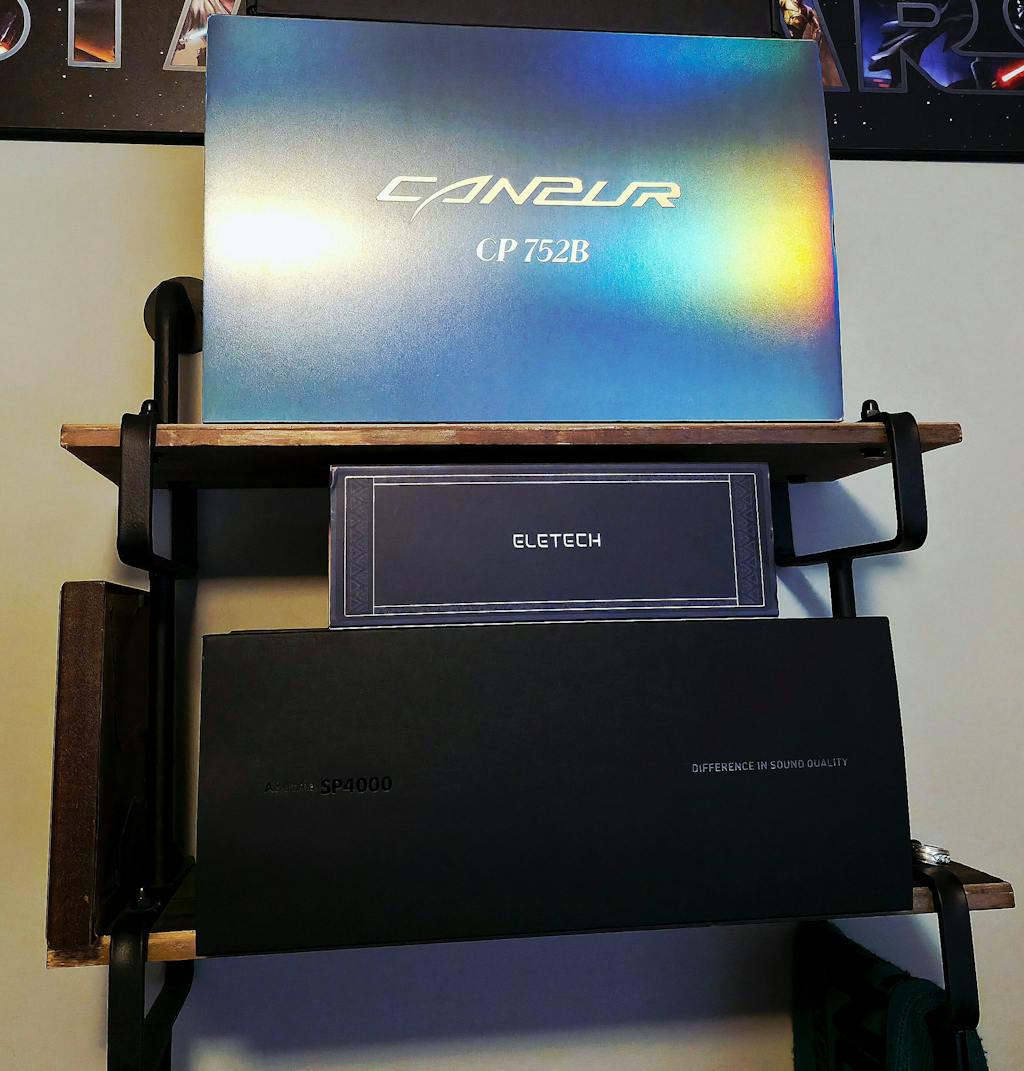
Finally, the build and package cement its status as an endgame monitor. The medical-grade resin shells are surprisingly comfortable for the driver count, and the collaboration with Eletech for the stock cable shows Canpur didn’t cut any corners. It is rare to find an IEM that manages to be both a technical monster and musically "fun" at the same time, but the CP752B pulls it off effortlessly. If you are looking for an IEM that competes with (and often wallops) sets costing significantly more, this is absolutely the one to beat.
Could not have had a better experience with this firm. Professional, quick and very helpful after the sale.
purchased the Canpur CP74E to fill a specific role in my collection. I already had the Elysian Apostle 2026 as a balanced daily driver and the Meze ASTRU as a warmer, more organic option. What I wanted from the CP74E was something more analytical and revealing, but still natural, cohesive, and enjoyable for extended listening.
The CP74E has delivered exactly that.
Its strongest quality is instrumental realism. On Lupe Fiasco’s “What It Do,” strings sound more convincing and more grandly performed than they do on Apostle. The difference is not just additional detail. The CP74E presents the instruments with a more believable sense of texture, scale, and physical presence.
The staging also works well for the role I wanted it to play. It feels wide without becoming artificially distant or hollow. There is enough depth and separation to study a recording, but the presentation remains intimate enough to preserve musical engagement. To be clear, this is not the IEM for those looking for hyper-separation and super-technicality. It aims to be natural in its presentation.
Bass is disciplined rather than exaggerated. It has solidity, punch, and a clean in-and-out quality. It does not overwhelm the mids or turn the IEM into a bass-focused experience. Listeners looking for heavy sub-bass rumble or a club-like presentation may want something else, but the CP74E’s low end is very well judged for a reference-natural tuning.
The midrange is cohesive and lifelike, which matters greatly to me because I listen to a lot of vocals, strings, horns, and percussion-heavy recordings. Treble remains controlled and clear without becoming sharp or fatiguing. The overall presentation is resolving, but not sterile.
Fit improved further with wide-bore tips. In my experience, they slightly reduced bass quantity, expanded the apparent stage, and helped separate percussion more naturally. That tradeoff worked well for my preferences.
The CP74E is not trying to create the largest stage, the thickest bass, or the most dramatic flagship effect. Its appeal is more mature than that. It is an analytical IEM for listeners who still prioritize naturalness, cohesion, and long-term enjoyment.
For my collection, it has become the ideal reference-natural analytical complement to Apostle and ASTRU.
Brilliant! I have both. I have been deep down the cable rabbit hole including PW Meet Agains Shielding, First Times Shielding, First Times re, 1950's Shielding, and Attila among many others and these are now by some margin my favorites. They are indeed quite different while sharing the same DNA. If you have any questions I can be found on Head-Fi under Bjorn154.
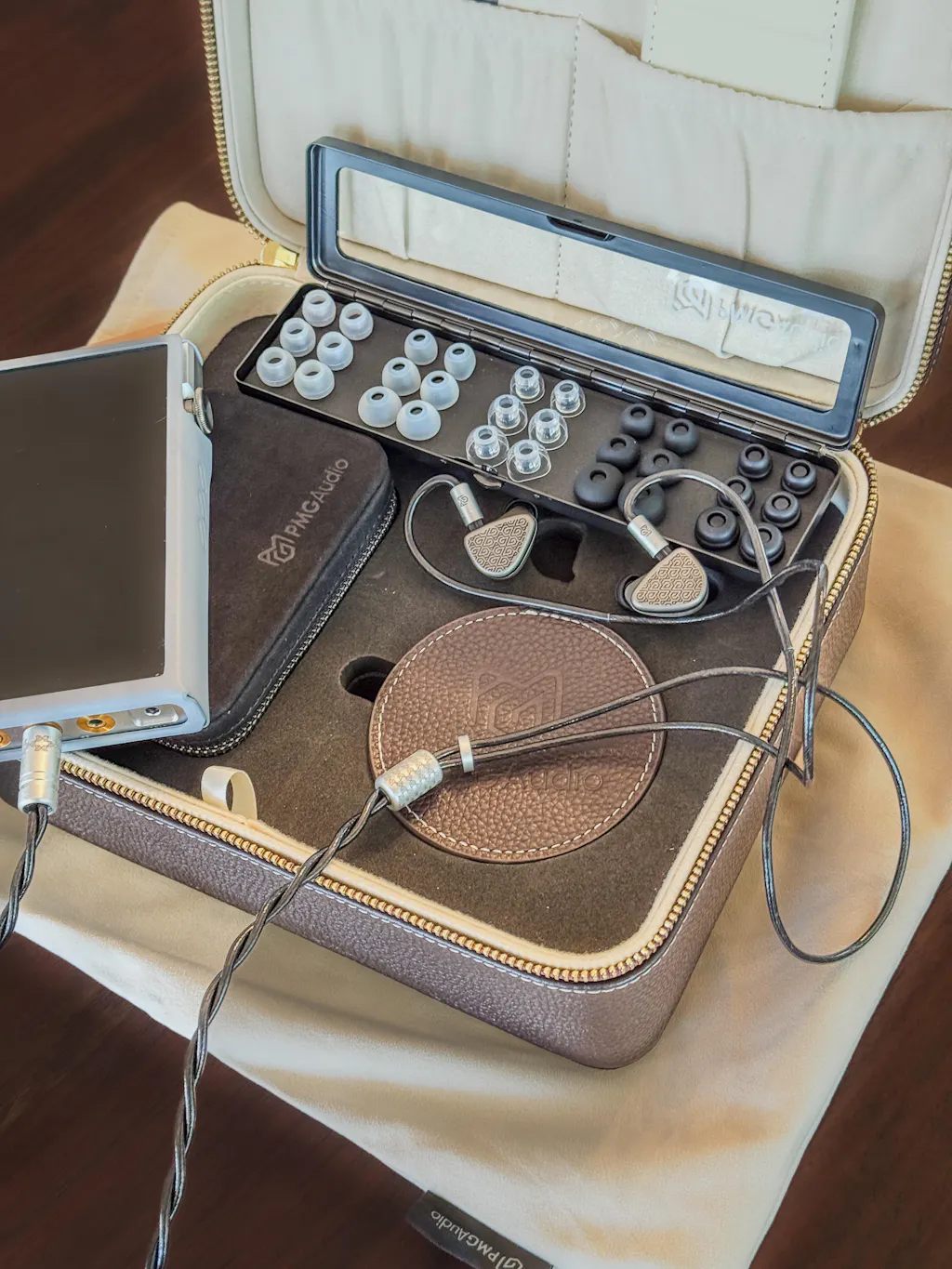
This IEM took me a while to write about. I extremely enjoy the ME, enough that it finally dethroned the Jewel for my personal taste. The ME has a great W sound signature, everything is where it belongs without any one frequency becoming offensive. Just enough bass presence to make every genre sound great without getting too heavy handed. This is where the ME surprised me, amazing texture and you feel deep notes that you can barely hear. I’ve never heard notes on an IEM this deep into the frequency range, still not sure if I hear them or just feel them. Bass is well layered and better layered, textured than any IEM I’ve heard. If you’re a bass head this IEM has great extremely detailed bass with just the right amount, it’s not over the top and does not extend into the vocal range. When called for the bass can really feel and sound like a floor standing sub woofer is in your ear. While the bass in other sounds can sound soft and perfectly textured with extreme details and separation in bass like I haven’t heard before. Mids are well placed in the mix and extremely well detailed with a touch of warmth. They have great separation and clarity. With the bass presence the mids are not pushed back into the mix and not masked or overly warm. They are still fairly close to neutral, just enough warmth and weight to sound natural. Vocal range is clean, well detailed with just the right amount of weight, texture, tone. Male and female vocals are on equal plane which I find less common in today’s iems. The treble is where some people may split opinions. For myself it’s pretty close to perfect like the Jewel, it’s all there, very well detailed but everything is a touch softer and non offensive. Treble doesn’t sound harsh, sharp or thrown in your face but more naturally there. I understand for some genres like EDM some people like a more sharp in your face treble for myself that type of peaky treble is harsh for long listening. The ME is easy to enjoy for long periods fatigue free and plays well with good and bad recordings making everything sound very enjoyable. For my taste this was the Jewel and the ME now replaces it with better bass while keeping the rest of the frequency range I loved in the Jewel. The ME has a little deeper stage than the Jewel and similar in width, great size, not the largest I’ve heard but great for a W sound signature, most with larger sounding stages tend to come with recessed vocals. Details have plenty of space between notes. It’s so well tuned it sounds great at low volumes and high volumes, keeping good dynamics at low is a feat, everything is present and no fatigue. Big bonus is the ME comes with a great cable and doesn’t require an upgrade. The cable is extremely well matched to the ME. Lastly the build quality is quite lovely in person, light weight, small for the number of drivers and comfortable. The supplied accessories are excellent, from exterior case to tip case to travel tip case and travel suede case. Best APX to date. It really takes analog sound I enjoy to the next step.